The Complete Guide to Site Excavation in Lagos, Nigeria: Cost, Process, Equipment and Contractor Selection
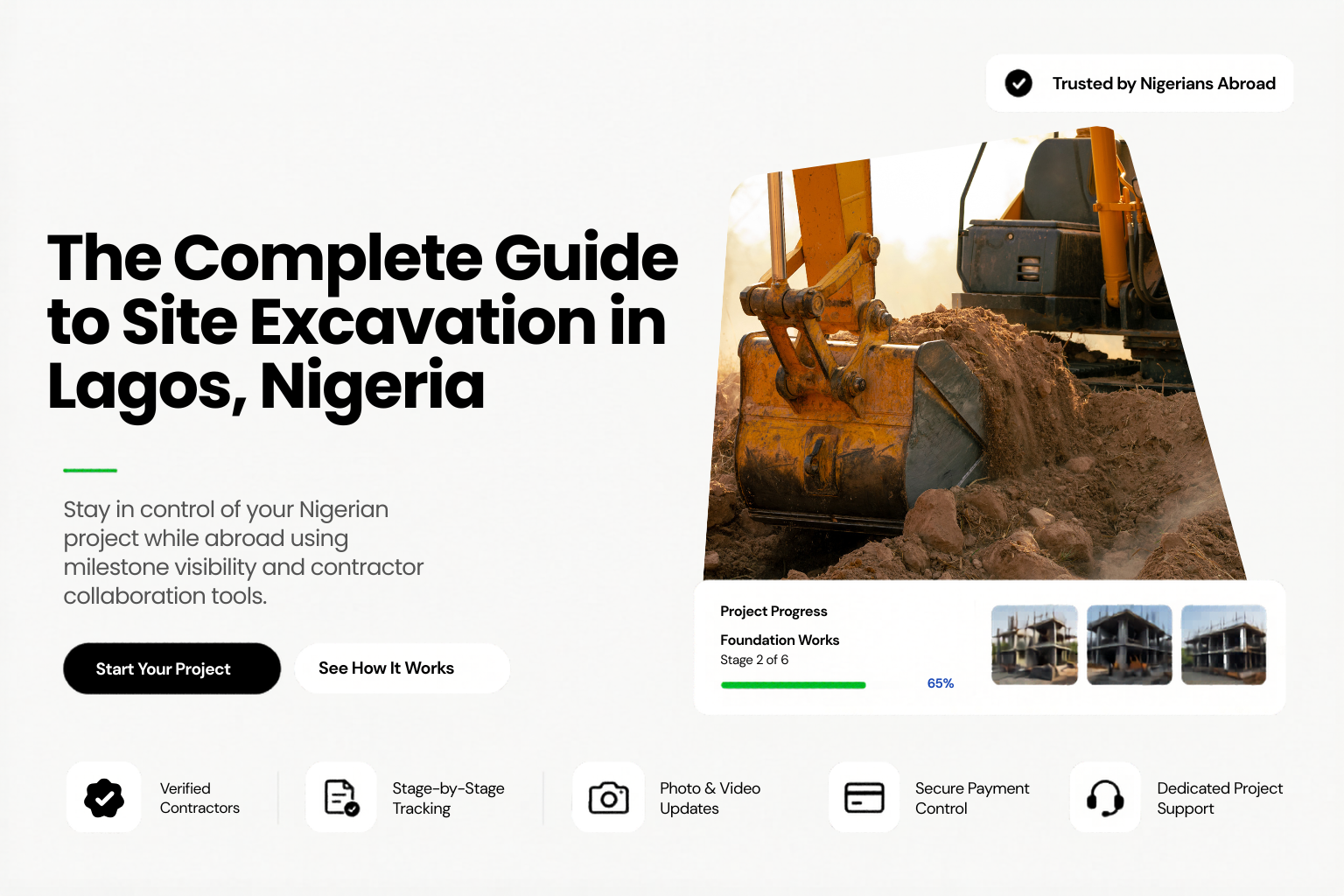
Before you start foundation in Lagos, the land must first be prepared properly.
This stage is called site excavation, and it is one of the most important early steps in any building project.
If you don't have the time to read this article to the end, you can watch the very brief summary here:
Many people think excavation simply means “digging the ground.” But in Lagos, it can quickly become more serious than that. The land may be sandy. It may be waterlogged. It may have been filled badly. Trucks may need to remove soil from the site. Water may need to be pumped out. Laterite may be needed. Compaction may be required before the foundation can safely continue.
That is why site excavation in Lagos should not be treated casually.
If you are building in Lagos, especially in places like Lekki, Ajah, Ibeju-Lekki, Epe, Ikorodu, Yaba, Surulere, Ikeja, Magodo, Festac, Maryland, Ogudu, Agege, or other mainland and island growth areas, you need to understand what excavation really involves.
And if you are a Nigerian abroad building in Nigeria from the UK, US, Canada, UAE, Europe, or anywhere else, this stage matters even more.
Why?
Because excavation happens early, money moves fast, and if you do not understand what is going on, someone can easily tell you:
“Water entered.”
“The soil is not good.”
“We need to cart away.”
“The machine price has increased.”
“We need laterite.”
“Send money quickly before work stops.”
Some of these things may be true. But even when they are true, they still need to be explained clearly.
This guide will help you understand site excavation in Lagos, what affects the cost, what equipment may be used, what to ask an excavation contractor, and how BuildMyHouse helps homeowners manage this stage with more structure and visibility.
Why Site Excavation Matters Before Foundation
A lot of homeowners get excited when they see blocks, columns, or walls going up.
That is understandable. That is the part of the project that looks visible. You can take pictures. You can show family. You can say, “At least work is moving.”
But the real strength of a building starts before the walls.
It starts with the ground.
Site excavation prepares the land for foundation work. It removes unsuitable soil, opens the foundation area, exposes the soil condition, and helps the contractor or engineer understand what kind of ground the building is sitting on.
If excavation is poorly done, the problem may not show immediately. It may show later as:
cracks in the building
uneven settlement
water collecting around the foundation
weak foundation support
poor drainage
extra concrete usage
repeated correction work
higher cost after the project has already gone far
That is why excavation is not just “digging.”
It is the stage where the ground starts telling you whether your building plan, soil condition, and foundation idea are working together.
If the excavation stage is confusing, the foundation stage should not begin casually.
What Site Excavation Means in Lagos Construction
Site excavation is the process of digging, cutting, removing, shaping, or preparing soil so that construction can begin properly.
Depending on the land and the building design, site excavation may include:
clearing bushes, debris, and unwanted material
removing topsoil
digging foundation trenches
cutting soil to the required depth
removing soft or unsuitable soil
preparing space for drainage
pumping water out of the site
carting away excavated soil
replacing weak soil with better material
backfilling with laterite or suitable filling material
compacting the ground before foundation work continues
For a simple residential building, excavation may be straightforward. But for waterlogged land, swampy land, filled land, soft soil, raft foundation, basement work, or large building footprints, excavation can become more expensive and technical.
This is why the excavation contractor should not just say, “We will dig it.”
They should explain:
what they are digging
how deep they are digging
what equipment they are using
what happens to the excavated soil
whether water pumping may be needed
whether cart-away is included
what proof will be sent before the next payment or foundation stage
That explanation is important, especially if you are managing the project remotely.
Lagos Land Conditions That Affect Excavation
Lagos is not one type of land.
A site in Lekki may behave differently from a site in Surulere. Land in Ikorodu may not behave like land in Victoria Island. A dry-looking plot in Ajah may surprise you once digging starts.
That is why excavation in Lagos Nigeria needs more attention than many homeowners expect.
Here are common Lagos land conditions that can affect excavation.
1. Sandy Soil
Many parts of Lagos have sandy soil.
Sandy soil can be easier to dig, but it may also collapse into trenches if not managed properly. Depending on the building design, sandy soil may require careful foundation planning and supervision.
The danger is when people treat sandy soil as automatically “easy.”
Easy to dig does not always mean easy to build on.
2. Waterlogged Land
Waterlogged land is very common in parts of Lagos, especially in coastal and developing areas.
If water enters during excavation, the site may need pumping. In some cases, the contractor may need to remove unsuitable soil, bring laterite, fill the land properly, improve drainage, or prepare for a stronger foundation system.
This is where many Lagos building budgets start changing.
A plot may look affordable when you buy it, but the real cost appears when excavation and foundation begin.
So if you are buying or building on land in Lagos, do not only ask, “How much is the land?”
Also ask, “What will it cost to prepare this land properly?”
3. Filled Land
Some plots in Lagos have already been filled before.
That does not automatically mean the land is bad. But it must be checked properly.
Poorly filled land can hide weak material, refuse, organic matter, or unstable soil. When excavation starts, the contractor may discover that some of the filling is not suitable for the foundation area.
This can lead to extra work, extra cart-away, extra filling, and extra compaction.
That is why filled land should not be handled with assumptions.
4. Soft or Weak Soil
Soft soil can create serious foundation concerns.
If the soil is too weak, it may need to be removed and replaced. It may also require compaction or a different foundation approach based on professional advice.
This is not the stage to guess.
If the soil is suspicious, slow down and verify before money keeps moving.
5. Restricted Site Access
Sometimes the land itself is not the only problem.
The road may be narrow. Trucks may struggle to enter. Equipment may not have enough space to turn. The estate may have access rules. Neighbours may complain. Traffic may delay movement.
In Lagos, logistics can increase excavation cost almost as much as the soil itself.
So when you receive an excavation quote, do not only think about digging. Think about movement, access, trucks, timing, and disposal.
Typical Site Excavation Cost Factors in Lagos
There is no single fixed cost for site excavation in Lagos.
Anyone who gives you a final price without understanding the site, soil, access, depth, building footprint, equipment, and cart-away requirement is probably guessing.
The cost of excavation in Lagos may depend on:
the size of the building footprint
the depth of excavation required
the soil type
whether the land is dry, wet, swampy, or filled
the amount of soil to be removed
whether excavator rental is needed
whether manual labour is enough
machine mobilization cost
number of tipper truck trips
cart-away distance
whether water pumping is needed
whether laterite filling is needed
whether compaction is required
whether the site has good access
Lagos traffic and truck movement restrictions
urgency of the work
The key question is not only:
“How much is site excavation in Lagos?”
The better question is:
“What exactly does this excavation price include?”
A cheap quote that excludes cart-away, pumping, filling, and compaction can become more expensive than a higher quote that explains everything clearly.
Equipment Used for Site Excavation in Lagos
The equipment used for excavation depends on the size of the job and the condition of the site.
Some small jobs can be handled manually, but many Lagos construction projects require equipment.
Here are common machines and tools used for site excavation.
Excavator
An excavator is used for digging, cutting, and removing soil.
It is common for larger excavation jobs, deeper foundation work, and sites where manual digging would be too slow.
If your project requires serious foundation excavation, the contractor may need to bring an excavator to site.
Backhoe Loader
A backhoe loader is useful for small to medium excavation work.
It can dig and also help move material. It is often used where a full excavator may not be necessary.
Bulldozer
A bulldozer may be used for clearing, pushing soil, grading, and preparing larger sites.
It is more common when the site needs serious clearing or leveling.
Payloader or Wheel Loader
A payloader helps load excavated soil or materials into trucks.
If there is serious cart-away work, a loader can make the process faster.
Tipper Trucks
Tipper trucks are used to remove excavated soil from the site.
They may also bring laterite or other filling materials.
This is why cart-away can become a major part of excavation cost. If many truck trips are needed, the price can rise quickly.
Compactor
A compactor helps compress soil or laterite after filling.
This is important because poorly compacted ground can later settle and create foundation or floor problems.
Water Pump
A water pump may be needed if water enters the excavation area.
In waterlogged parts of Lagos, pumping may not be optional. It may be necessary before foundation work can continue.
Cart-Away, Soil Disposal, Water Pumping, and Compaction
Many homeowners budget for digging but forget the other things that come with excavation.
That is where arguments usually start.
The contractor says excavation has started. Then suddenly, more money is needed for cart-away, pumping, laterite, or compaction.
Let’s break these down.
What Is Cart-Away?
Cart-away means removing excavated soil from the site.
When soil is dug out, it has to go somewhere. Sometimes part of it can remain on site for backfilling. But if the soil is too much, unsuitable, or blocking work, it must be removed.
That means tipper trucks.
Before work starts, ask:
Is cart-away included in this quote?
How many trips are included?
What happens if the number of trips increases?
Where will the soil be taken?
Who is responsible for disposal?
Is loading included?
Do not assume excavation automatically includes cart-away.
In Lagos construction, assumptions can be expensive.
Soil Disposal
Soil disposal should be handled responsibly.
You do not want the contractor dumping soil carelessly and causing problems with neighbours, estate management, road users, or local authorities.
If the project is inside an estate or a controlled area, ask about soil disposal rules before trucks start moving.
Water Pumping
If the site is waterlogged, water may enter the excavation area.
This can slow down the work and increase cost. Pumping may be needed before the foundation stage can continue.
Ask:
Is water expected?
Is water pumping included?
What happens if pumping takes longer than expected?
Will the water issue affect the foundation approach?
If the answer is vague, pause and request a clearer explanation.
Compaction
If weak soil is removed and replaced with better material, compaction may be required.
Compaction helps the filled ground become stronger and more stable.
Poor compaction can cause future settlement problems. That is why filling and compaction should not be treated as “just pour sand and continue.”
What to Ask an Excavation Contractor in Lagos
Before choosing an excavation contractor in Lagos, ask clear questions.
Do not be shy. This is your money, your land, and your foundation.
Ask:
Have you inspected the site physically?
What type of soil do you think we are dealing with?
What exactly is included in your excavation quote?
Does the quote include excavator rental or machine mobilization?
Does it include cart-away?
How many tipper trips are included?
What happens if more trips are needed?
Does the price include water pumping?
Does the price include backfilling?
Does the price include compaction?
How many days will the work take?
What equipment will you use?
What site access problems do you see?
What proof will you send before payment?
What can cause the price to change?
A good excavation contractor may not know every single issue before digging starts. But they should be able to explain their assumptions.
Every quote has assumptions inside it.
Your job is to bring those assumptions out before money moves.
Red Flags in Excavation Quotes
Some excavation quotes look cheap because important things are missing.
Watch out for these red flags:
The quote says “everything included” but nothing is listed
No physical site inspection before a serious quote
No mention of soil condition
No mention of cart-away
No mention of tipper trips
No mention of water pumping on a water-prone site
No equipment detail
No clear timeline
No proof requirement before payment
Too much pressure to pay quickly
No explanation of what happens if site conditions change
If the quote is not clear, do not rush.
A cheap unclear quote can become more expensive than a higher quote that explains the job properly.
If You Are Building in Lagos From Abroad, Be Extra Careful
For Nigerians abroad building houses in Nigeria, excavation is one of the stages where confusion can enter very quickly.
You may be in London, Houston, Toronto, Calgary, New York, Atlanta, Dubai, Berlin, or anywhere else while someone in Lagos is telling you:
“Oga, the soil no good.”
“Madam, water don enter.”
“We need to cart away.”
“Machine price has increased.”
“We need laterite before foundation.”
“Send money fast so work no stop.”
Some of these things may be true.
But truth still needs structure.
Before approving extra money, ask for:
photos and videos of the site condition
a clear explanation of the issue
revised quote breakdown
equipment details
number of truck trips
reason for the extra cost
what happens if you do not approve immediately
whether the issue affects the foundation plan
what proof will be sent after the work is done
Do not pay because you are confused.
Pay because the issue is clear.
That is how you protect yourself when managing a building project in Nigeria remotely.
Why Excavation Should Be Tied to Milestone Payments
Excavation should not be treated as one random payment request.
It should be tied to a clear stage.
For example, before paying fully for excavation, you should know:
what work has been completed
whether the required depth was reached
whether the soil was removed properly
whether cart-away was completed
whether water was handled
whether backfilling or compaction was done if required
whether the site is ready for foundation
whether the next stage truly makes sense
This is why milestone payment thinking is important.
The next payment should not move just because the site looks busy.
The next payment should move because the stage is clear, the proof is available, and the next step is justified.
How BuildMyHouse Helps Homeowners Manage Excavation From Abroad
BuildMyHouse helps Nigerians abroad and homeowners in Nigeria manage property work with more structure, visibility, and control.
For site excavation in Lagos, this means you should not only hear:
“Work is going on.”
You should be able to understand:
what stage the project is in
what the excavation work involves
what equipment is being used
whether cart-away is included
whether water pumping is needed
what materials or services are involved
what photos and videos have been uploaded
what the contractor is saying
what payment is being requested
what must be complete before foundation begins
This is the BuildMyHouse mindset:
Clear scope.
Stage evidence.
Structured communication.
Payment discipline.
Not vibes.
Not pressure.
Not random updates.
If you are building in Nigeria from abroad, the safest thing is not to wait until the project becomes confusing before asking serious questions.
Start with structure from the beginning.
BuildMyHouse in Lagos
BuildMyHouse supports homeowners who want clearer project workflows for construction, renovation, repairs, and interior projects in Nigeria.
If you are planning site excavation, foundation work, renovation, repairs, or a building project in Lagos, you can start with a structured project request through BuildMyHouse.
BuildMyHouse address:
7 Ransome Kuti Rd, Akoka, Lagos 100001, Lagos, Nigeria
Phone:
+234 703 028 2417
Website:
buildmyhouse.app
Final Advice: Do Not Start Foundation on Confusion
Site excavation in Lagos is not just the first stage of foundation work.
It is the stage that reveals whether the land is ready, whether the contractor understands the site, and whether your budget has been planned with reality in mind.
Do not rush it.
Do not pay blindly.
Do not assume “digging” includes everything.
Ask about soil, cart-away, water pumping, backfilling, compaction, equipment, access, timeline, and proof.
If you are building from abroad, ask even more questions.
A serious contractor should not be offended by clear questions. A serious project should be able to explain itself.
And if you want to manage your Lagos construction project with clearer scope, stage visibility, contractor communication, and payment discipline, start your project with BuildMyHouse.
Start your project at buildmyhouse.app