The Tiles Were New. The Step Was Still There.

Based on a true-life story. This is a fictional composite drawn from many diaspora voices — not a BuildMyHouse case study, not a named customer, and not proof of any real project.
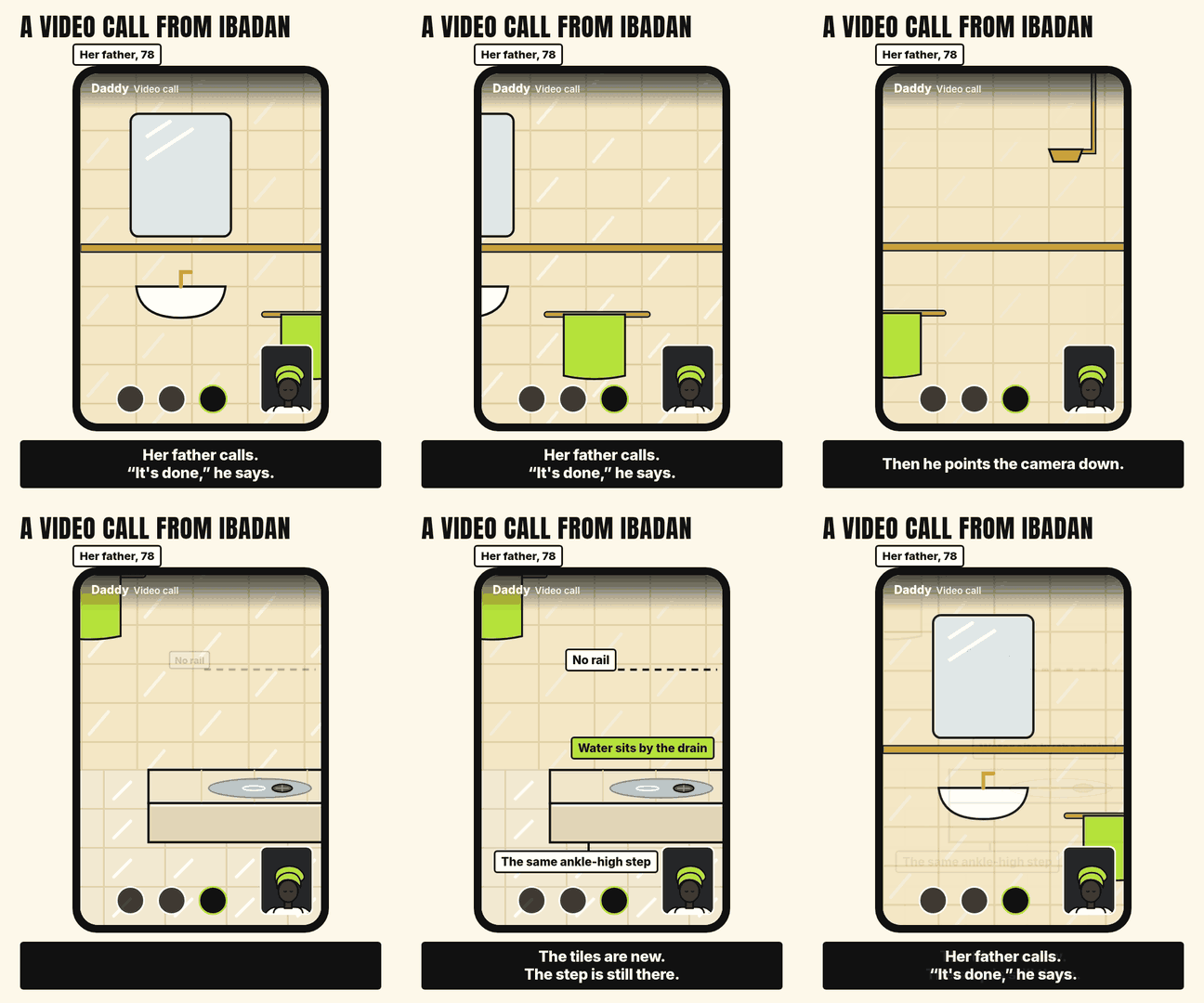
Bisola was sitting in her car outside the pharmacy in Leicester, twenty minutes before her shift, when her father's video call came in. He held the phone too close, the way he always did, so for the first few seconds she could only see his forehead and the ceiling fan.
"It's done," he said. "Your uncle said to show you."
He turned the phone around. The bathroom had new wall tiles, glossy and cream with a gold line running through them. There was a new mirror and a new towel rail. It looked like a bathroom from a hotel advert.
Then he moved the camera down, and she saw the step.
It was the same step into the shower, ankle-high, the one he had caught his foot on in March. The floor tiles were new too, and just as shiny as the walls. There was no rail by the shower. Near the drain, where the floor was supposed to slope, a small pool of water sat from the morning and wasn't going anywhere.
"Daddy, where do you bathe now?"
He laughed a little. "In the corridor. With a bucket. Just for now. The floor is too fine to spoil."
She said something kind, ended the call and stayed in the car. She did not start the engine.
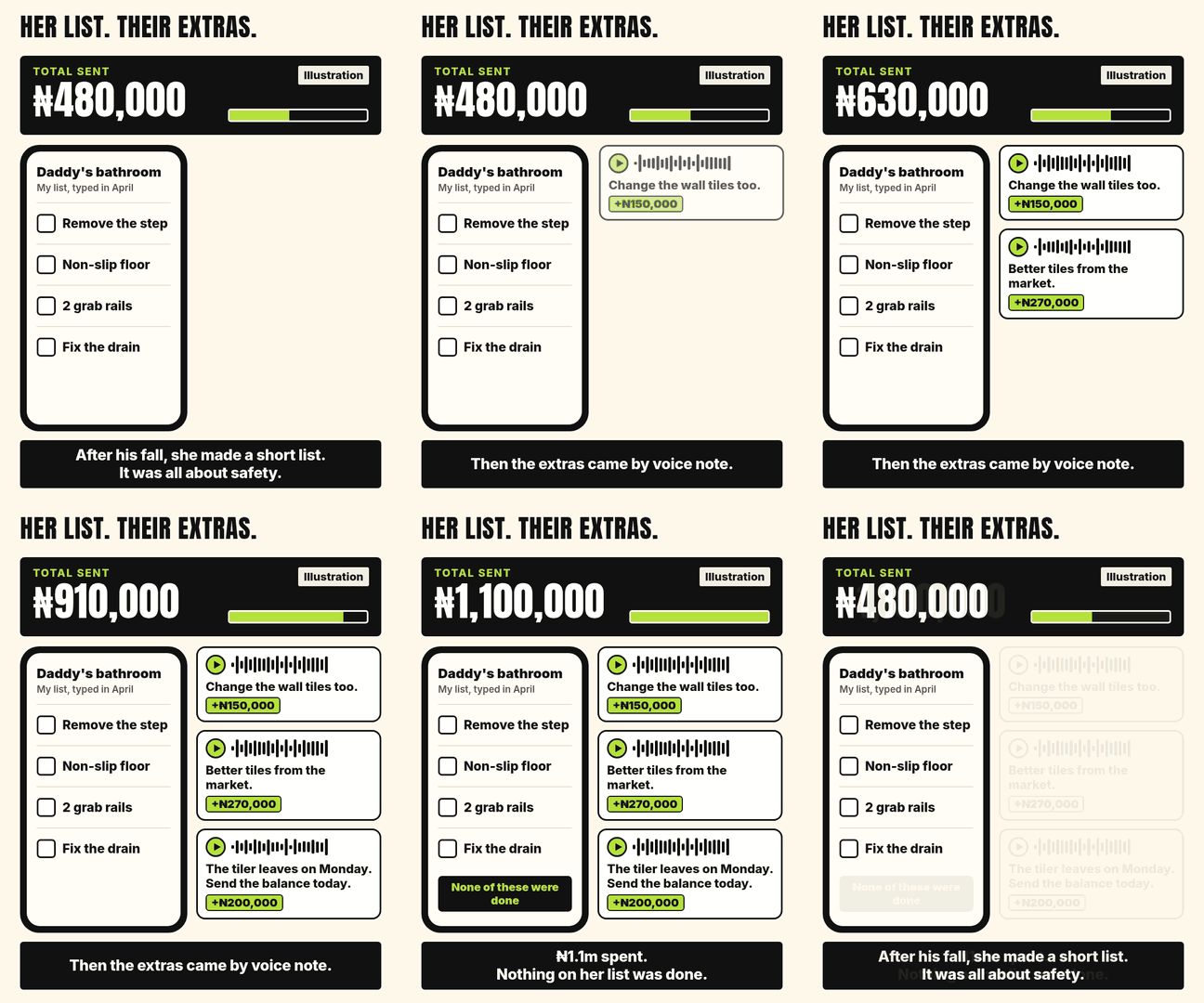
It had started in April, with a list she typed on her phone after the fall. Her father was seventy-eight. Her mother had died four years earlier, and he lived alone in the house in Ibadan with a girl who came in the mornings to cook. The list was short: remove the step, lay a floor that isn't slippery when wet, fit two grab rails, and fix the drain so water runs away. Nothing fancy. What she wanted was for her father to be able to wash without anyone worrying.
Her uncle, her father's younger brother, lived fifteen minutes away. Of course he would handle it. He knew a tiler. He sent a figure of ₦480,000, and she sent it that same week, relieved that someone was on the ground.
Then the calls began to come from the site.
The first was a voice note. Since we are breaking the floor anyway, it makes sense to change the wall tiles. It will not cost much. ₦150,000. She said yes, because it sounded sensible and because saying no to an older uncle over a phone never sounds sensible.
The second call was about the tiles he had seen at the market. They were better and the ones they'd planned were cheap, so it would be a shame not to. The third was the tiler, who would leave for another job on Monday if the balance wasn't sent today. In the background she could hear men working and a grinder running. The site sounded busy, and the busyness felt like progress, so she sent it.
Months later, on a forum late at night, she read someone describing their own builders: they chase you like they are the one who has the money. She laughed out loud in the dark, and then she didn't feel like laughing.
The total came to ₦1.1 million. Each amount had been small when she agreed to it, and each came with a reason. None of the reasons had anything to do with the step.
That was what she kept coming back to in the car. Nobody had stolen anything. Her uncle had not lied to her. He truly believed the bathroom was done, and so did the tiler. To them, done meant beautiful and finished and fit for a visitor to see. To her, done meant her father could get into the shower without lifting his foot over a ledge he had already fallen over once. Two people had spent the money on two different jobs, and only one of those jobs had been written down, on her phone in Leicester, where nobody on site could read it.
Another man on the same forum wrote that the money doesn't get to where he told me it will get it to. She knew that feeling. Her money had arrived somewhere, just not where she had pointed it.
She did not call her uncle to complain. What would she say? You made it too nice? The only way to say it was to accuse him, and she couldn't do that to a man who had spent three Saturdays standing over tilers for her father.
So I just do some shouting on phone and leave them, that same Nigerian wrote about his builders. Bisola didn't even shout.
A colleague who had repaired her own mother's house in Enugu mentioned BuildMyHouse to her. She didn't make it sound like a rescue. What she said was: next time, write down what done means before anyone picks up a tool.
That was where Bisola started. It was the same small job, without the gold line.
The scope came first. It was written, and it was specific about the things her father's body cared about: the step removed, a non-slip floor, two rails at heights they agreed, and a drain that clears. It also said plainly what was out of scope. The wall tiles stayed as they were.
Then came a person matched to that scope, someone whose job was the scope and not the family chat. Her uncle still came by. He looked, he asked, and he reported back to her father. On the old forum someone had put it better than she could: Your family members can only supervise to ensure compliance. It gave her uncle a role that respected him and didn't hand him the money.
The work moved in stages. First the old floor and the step came out and the drain fall was set. Then the floor went down, and after that the rails went up. At the end of each stage she got proof tied to that stage. Before anything was covered, she saw the pipework and a bucket of water poured onto the new slope and running away. BMH did not pretend to be the plumber or an inspector. It just made sure the work was seen before it went under tiles.
Once, on site, someone suggested changing the basin while they were at it. This time the suggestion arrived written down as a change, with its own price, and she could say no without arguing with anyone. She said no.
She approved a stage when it was finished and she understood it, and the money moved after that. A grinder running in the background of a phone call was no longer a reason to pay.
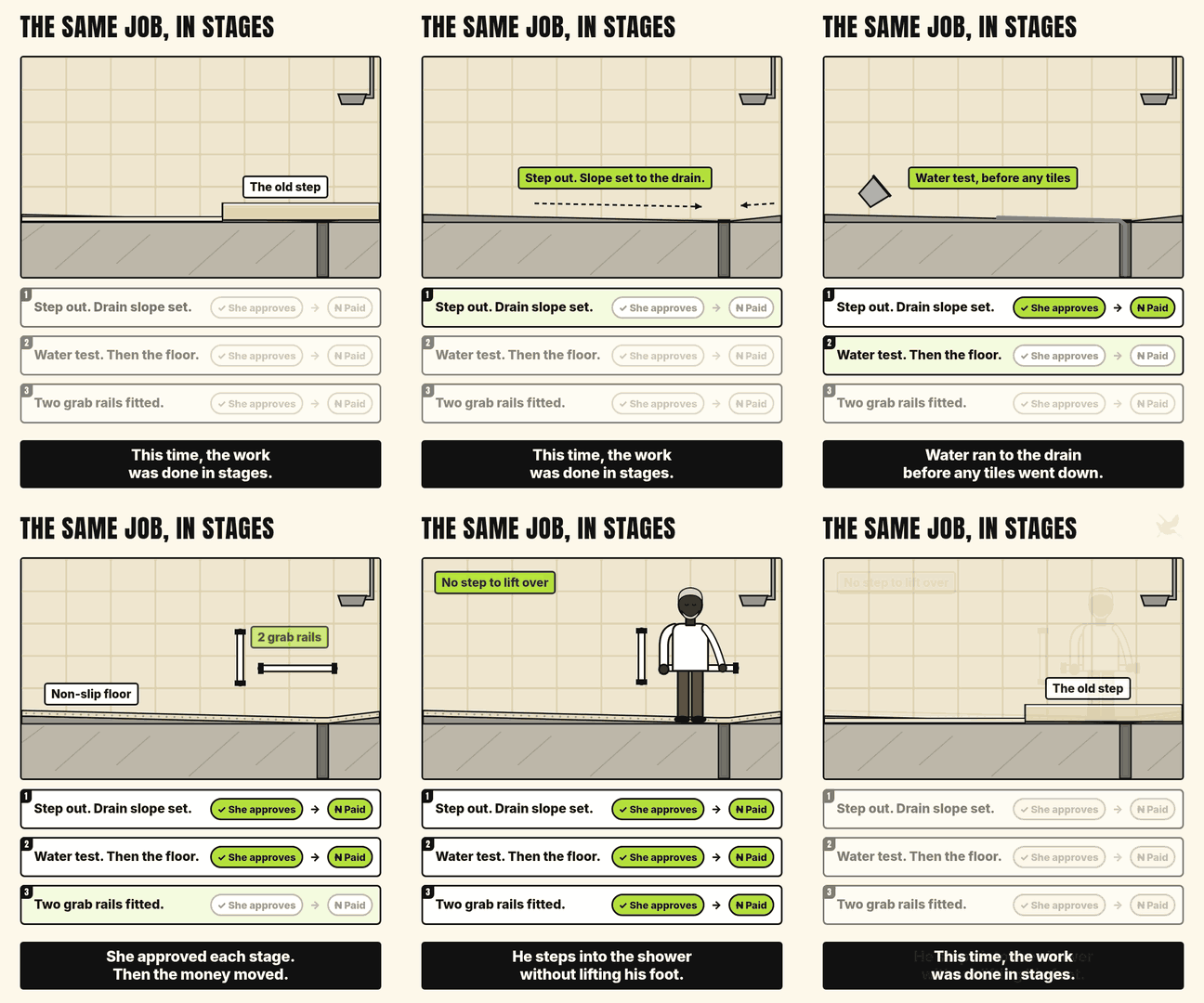
In November her father called again, holding the phone too close as usual. He turned it around to show her the shower, one hand on the rail, and stepped in without lifting his foot.
The wall tiles are still the old cream ones, and nobody has mentioned them since.
Based on a true-life story. Fictional composite. All naira figures are illustrative. Complaint texture drawn from public forum voices in the complaint-language research pack; not a real customer testimonial, receipt, or project ID.