Your Cousin’s Number Is Not a Budget: Why Building Costs in Nigeria Keep Growing After You Send Money
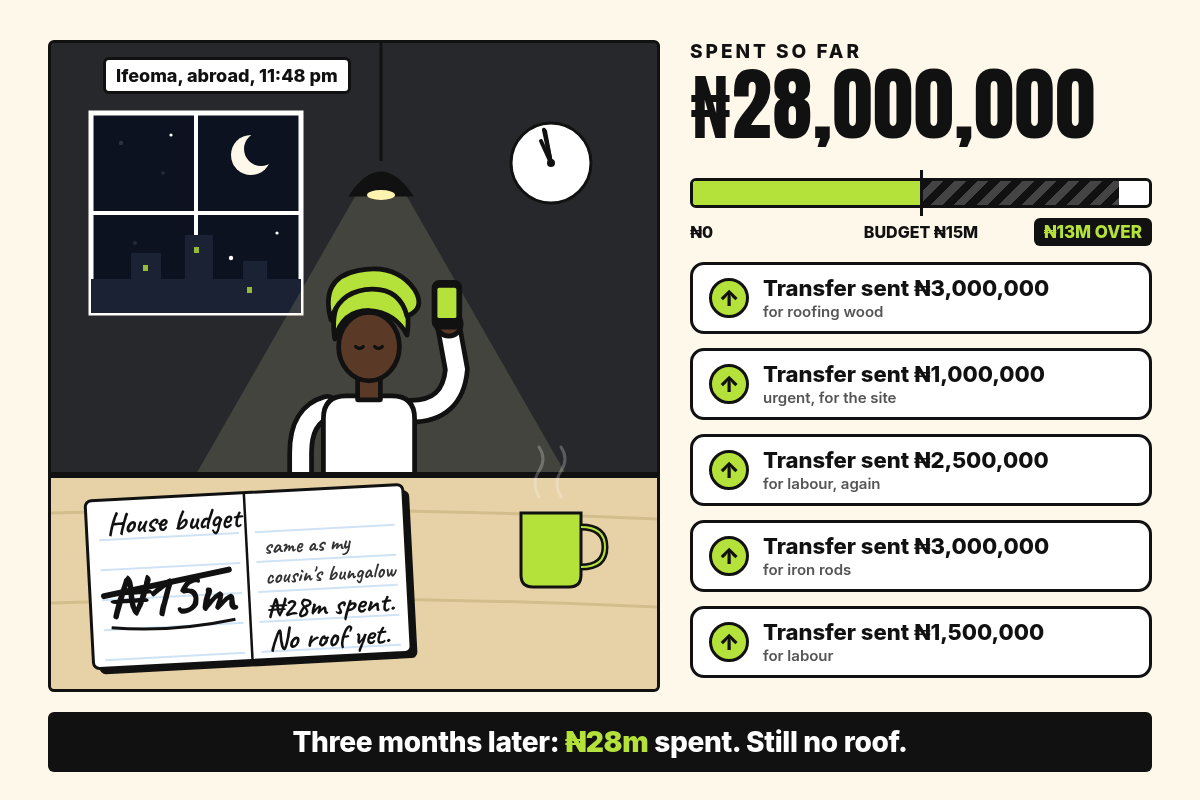
Based on a true-life story. This is a fictional composite drawn from many diaspora voices, not a real customer or project.
Budgeted From a Cousin’s Story
Ifeoma did not leave Nigeria to become a quantity surveyor by WhatsApp. She left for school and stayed for work. She learned how to keep sending money home while still paying rent, buying winter coats, and watching the naira move in ways she could not control.
Back home, the family house needed work. Not a mansion. A proper roof, and rooms that did not smell like last year’s rain.
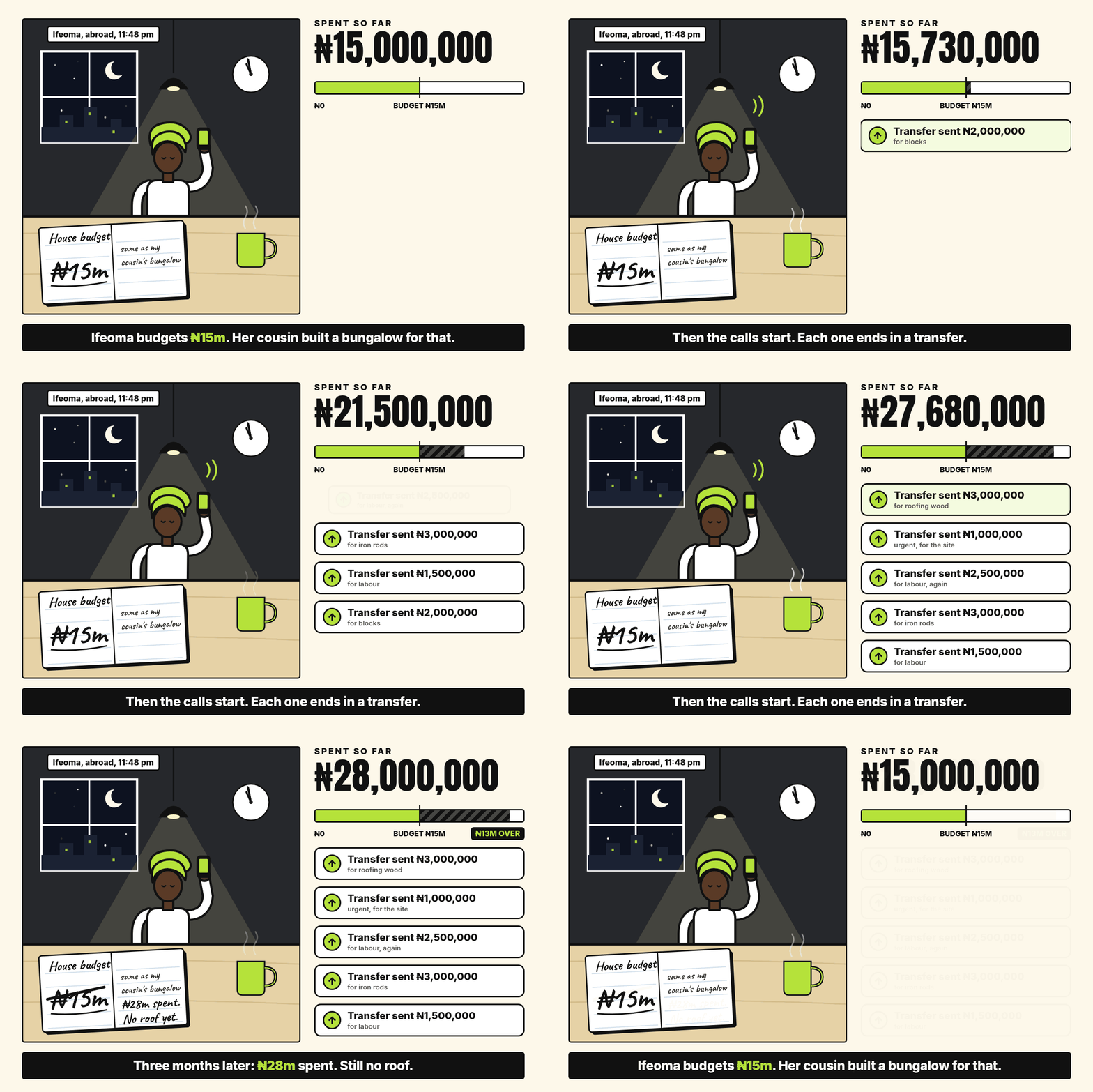
A cousin had built a three-bedroom bungalow for ₦15 million two years earlier, so Ifeoma budgeted ₦15 million. It sounded sensible. Someone she knew had built something similar, and there was a number. She wrote it down and started sending money.
Three months later, she had spent ₦28 million. There was still no roof.
The extra money did not arrive as one shocking demand. It arrived in pieces: foundation levies, then fencing fees, then roofing fees that somehow did not become a roof. Then came the urgency.
“The cement price will go up tomorrow.”
“The owner needs the money today.”
“The price will increase next week.”
More than once, Ifeoma believed something had been fully paid for. Then, months later, another request came, and she was told more money was needed “to enable him finish this project.” She was billed for a crew of twenty. Five people showed up.
Before each transfer, the plan sounded clear. After the money moved, the plan became harder to explain. There was always another amount, another reason, another piece of work that was supposedly included before but now needed additional money.
The problem was not only that somebody gave her a bad number. The deeper problem was that she had no reliable way to answer one question: what exactly did the last transfer complete?
Later, when her mother’s occupied rooms needed a roof leak fixed and a section of plumbing repaired, she did it differently. Write down what needs to be done. Match someone to that work. Break it into stages. Show what was completed. Let her approve it. Then move the next money.
For once, the payment had somewhere specific to go. When the roof stage closed, she got a dry ceiling and a record of what the money had become.
Her advice to the younger ones now: if someone gives you a number that begins with “my cousin built…”, that is not a quote. That is a rumour with an invoice attached.
Why a Quote Is Not the Same Thing as a Building Budget
A contractor can tell you, “I can do the work for this amount.” That may be a quote. It is not automatically your complete project budget.
A real budget begins with a defined job. What are you building? What already exists, and what needs to be removed? What materials are required, and who supplies them? What labour is included, and what is not? What happens if the design changes, or if something hidden is discovered after work begins?
Without those answers, a price is just a number attached to an incomplete description. This is one reason so many people end up searching why their building cost in Nigeria doubled. The first number may never have represented the full job in the first place, and when the work is being managed from abroad, that gap is even harder to see.
When a Contractor Keeps Asking for More Money in Nigeria
Not every request for additional money is dishonest. Construction changes, prices change, and site conditions can reveal problems nobody saw at the beginning. The problem is when there is no clear way to separate a legitimate change from a cost that should already have been included.
Here are the most common ways a budget loses its shape.
Fee stacking
The first figure sounds affordable. Then other costs start appearing separately: transport, labour, equipment, waste removal, delivery, supervision, extra materials, another trip, another fee.
Some of those costs may be real. The question is whether they should have been identified before the work began. A cheap quote becomes expensive when important parts of the job were left outside the first number.
“The price will increase tomorrow”
Urgency works because nobody abroad wants to hear that waiting one more day will make the project more expensive. Sometimes material prices genuinely move. But urgency should not replace evidence.
If somebody says a material price has changed, ask for the current specification, quantity, and supplier price. You are trying to understand a purchase, not win an argument.
“Fully paid” becomes another payment request
You believe a stage has already been paid for. Then the same stage comes back asking for more money.
That usually means one of two things happened. Either the original amount did not cover what everybody thought it covered, or the scope changed without being written down. Both start with the same weakness: nobody recorded exactly what “fully paid” meant.
Paying for workers who do not show up
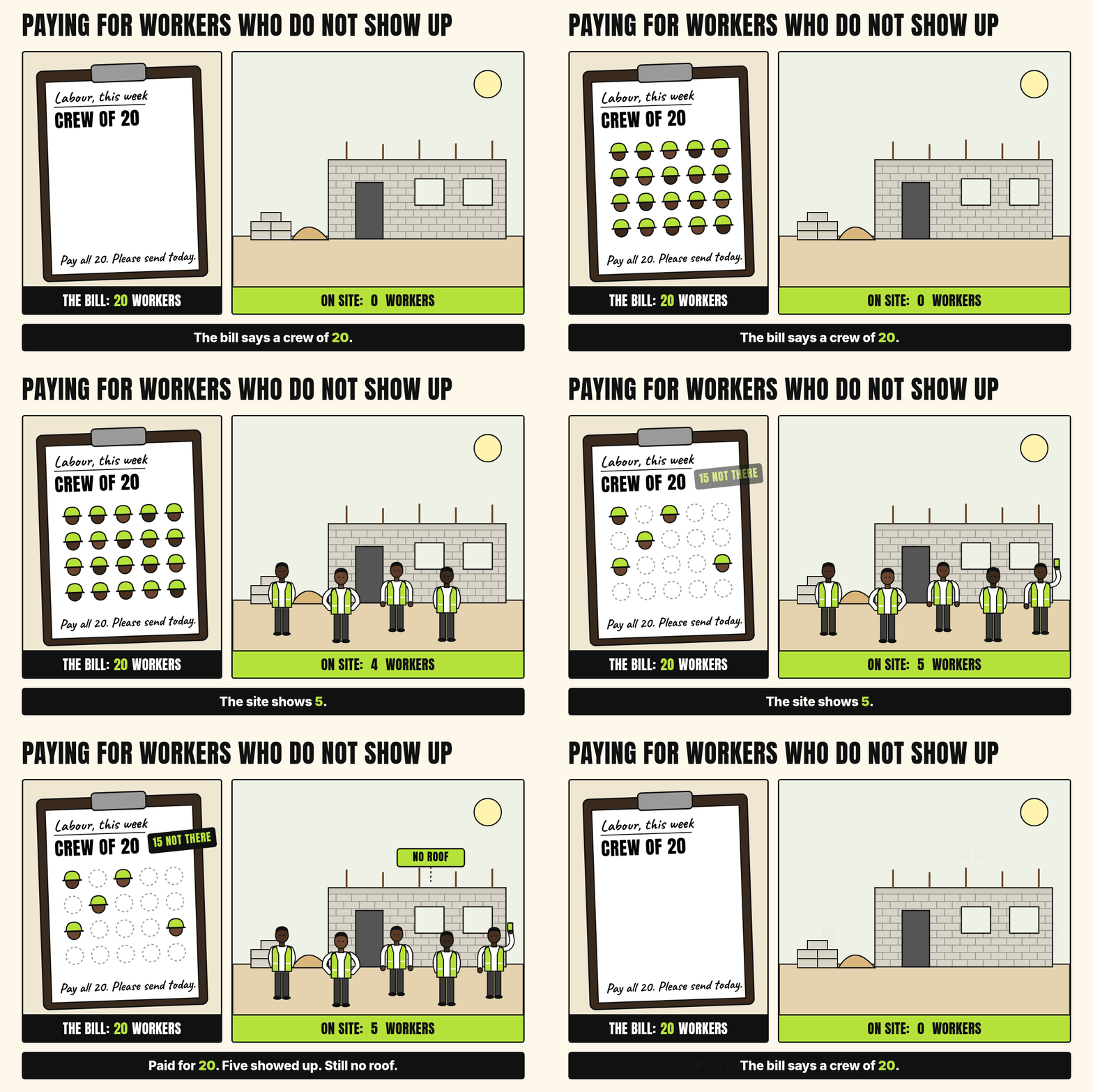
If you are billed for a crew, you should understand what labour the amount is paying for. The point is not to count heads in every photograph. It is to connect labour cost to defined work: what was the team supposed to complete, and what did it actually complete? A project should not be judged by how busy the site looks.
Paying ahead of unfinished work
This is where distance gets expensive. You send money for the next stage because someone says the current one is “almost done.” Then another payment follows. Soon your money has moved further than the building, and that is difficult to unwind.
What a Real Written Scope Looks Like
If you want to know how to budget for building a house in Nigeria from abroad, start before the price. Start with the work.
A written scope should let two different people read the same document and understand the same job. For a repair, it identifies the exact leak, pipe, room, roof section, or damaged fitting. For a larger project, it describes the relevant drawings, stage, quantities, materials, responsibilities, and what counts as complete.
A useful scope answers questions like these:
What exact work is being done, and where?
What materials or specifications are expected?
Who supplies each item?
What labour and logistics are included?
What is excluded?
How long is the work expected to take?
What proof will show that it is complete?
Who decides whether it is acceptable?
What happens if the scope changes?
A finished house your cousin built is not a scope for your house. Two three-bedroom buildings can have different soil, roof design, finishes, access, drainage, wiring, and structure. “Mine is similar to his” is not enough to build a reliable budget.
How to Monitor a Building Project in Nigeria From Abroad
You do not need to become a builder because you live overseas. You do need a way to understand what is happening without depending on general progress pictures.
A photograph of workers on site tells you that workers were on site. It does not tell you which stage was completed. A useful update is tied to a specific piece of work. If the stage is roofing, the evidence should show that roofing work. If it is plumbing, it should show the plumbing in that stage. If it is a repair, the before-and-after should clearly show the exact problem you approved.
That is much stronger than ten unrelated pictures and a message saying “work is going well.”
How to Pay for Building Work in Stages
The simplest principle is this: do not let payment run too far ahead of completed work.
That does not mean contractors should finance your project. They may need money for approved materials, labour, transport, or mobilisation before a stage begins. What matters is defining the stage first.
In practice, you agree what the stage contains. The contractor receives what is needed to begin that approved work. The work is carried out, and proof of that exact stage is provided. You review it. Then the payment tied to completing that stage moves, and only after that does the next stage begin.
The proof has to match the stage. Not a picture of cement when you are trying to confirm plumbing. Not an old photograph of another room. Not a general video walking around the compound. The question is always the same: what did this particular payment become?
Before You Send the Next Transfer
If you are already halfway into a project and the requests keep coming, you do not need to solve the whole construction industry tonight. Before the next payment, ask:
What exact work is this money paying for?
Is that work written down somewhere?
Was this cost already included in an earlier payment?
What part of the previous stage is actually complete?
What proof do I have of that specific work?
Has the scope changed? If so, what changed and why?
Who is confirming that the stage is ready to move forward?
If I send this money today, what should I be able to see once it is spent?
If nobody can answer those questions clearly, waiting is not being difficult. It is budgeting.
Where BuildMyHouse Fits
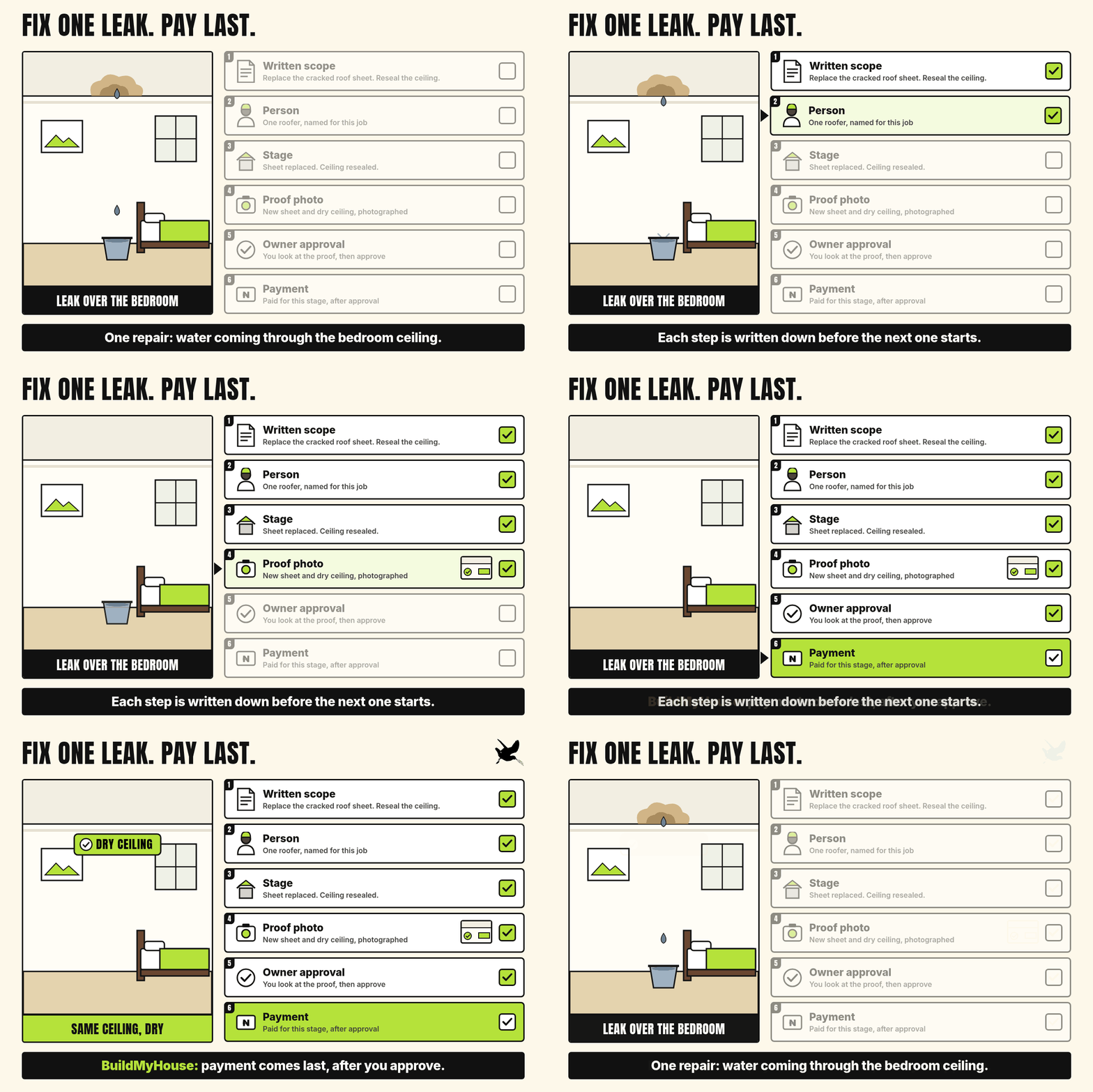
BuildMyHouse was built around a simple problem: too much property money moves before anyone agrees on what that money is supposed to become.
The order we use is straightforward:
Scope. Write down the work.
Person. Match someone to that specific work.
Stage. Break the job into parts that can actually be followed.
Proof. Tie photos, video, receipts, or other evidence to the stage being worked on.
Approval. The owner reviews what has been completed.
Payment. Money follows the agreed work, not the latest request for another transfer.
You do not have to begin with a full house. Smaller jobs often make more sense first: a leaking roof over the room your parents sleep in, a plumbing fault, a damaged window, an electrical problem. Repairs in an occupied family home are small enough to define clearly and important enough that you want to know exactly what was done. Once the work has a written scope, it becomes much easier to ask the right questions about price, progress, and payment.
If there is a repair at your property in Nigeria that has been sitting in WhatsApp messages and family discussions, start by getting it scoped at buildmyhouse.app.