Five Years Became Fifteen. So She Started Building Home.
Based on a true-life story. This is a fictional composite drawn from many diaspora voices. Ola is not a real person, but the Liverpool protest she stands in was real. All naira and pound figures are illustrative. This is not a BuildMyHouse case study, not a named customer, and not proof of any real project.
The care home is quiet at 3:40 in the morning. Not silent, never silent, but quiet the way a care home in England is quiet at that hour: a call bell blinking at the end of the corridor, an old man asking for his wife who died years ago, the soft squeak of Ola's work shoes on the floor she has walked a thousand times.
She has been a care worker in England for almost five years. Night shifts, mostly. She turns people who cannot turn themselves. She washes them, changes them, sits with them when they are frightened. She does the medication round with the chart in one hand and the trolley in the other, checking every name twice. She knows how to hold a hand without hurrying it. She knows how to smile at a resident who has just shouted at her. She knows how to eat jollof rice from a plastic tub at 4 a.m. standing up, because sitting down means she will fall asleep.
Before England, she spent nine years at the front desk and on the wards of a private hospital in Ibadan, booking patients, cleaning, running errands for the nurses, watching how a good clinic is run and how a bad one fails people.
Five years. That was the number she held onto. Five years and she could apply to settle. Then, a little after that, the British passport. She had the date written in the back of her diary in red pen. She had already told her mother, on a Sunday call, "Mummy, by early 2027, I will be free to come and go."
Her mother had laughed and said, "Then come and go to Ibadan first."
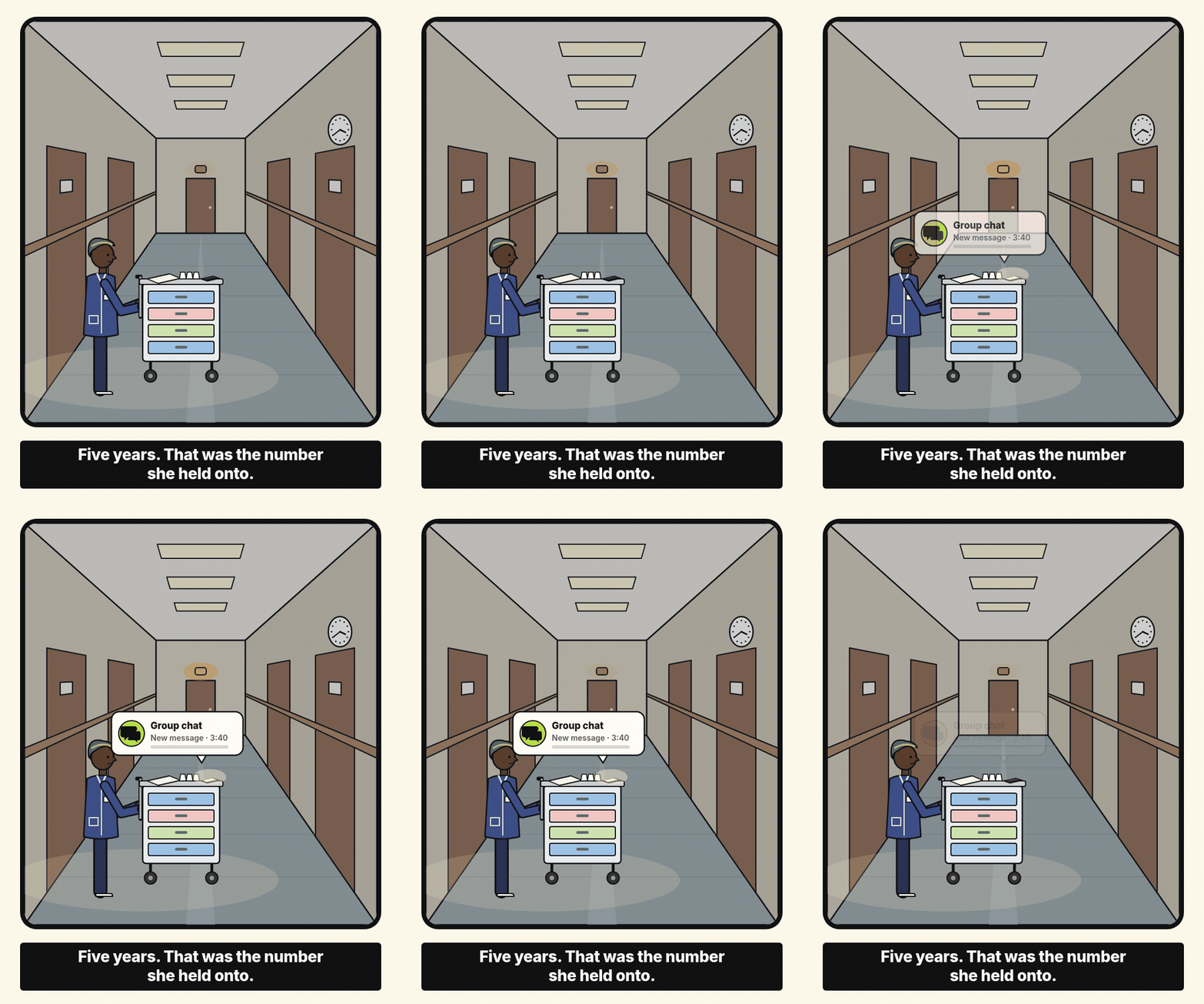
The news came the way news always comes now: in a WhatsApp group.
Someone posted a screenshot. Then a link. Then a voice note from a woman in Manchester who was crying so much you could not make out the words. The government had a plan to change the rules. For most migrants, the wait to settle would go from five years to ten. For workers in jobs below degree level, care workers like Ola, the plan said it could be fifteen.
Ola's job is below degree level. That is just the truth of it. She read the plan in the staff toilet with the door locked, and she knew it was talking about her. She read it again. She did the sum in her head slowly, twice, the way she checks a medication chart.
Fifteen years. She would be fifty-three.
It was still only a plan. Nothing was final. Everyone kept saying the government would decide before the end of the year. But she had lived long enough to know that "still only a plan" is what people say right before a plan becomes your life.
That night she went back onto the floor and did her job perfectly. Nobody could tell. That is the thing about carers.
On 28 September she took a coach to Liverpool.
She had never been to a protest in her life. In Nigeria, her mother would have locked the door. But a colleague from the union said, come, just stand with us, and she went because she did not know what else to do with the feeling in her chest.
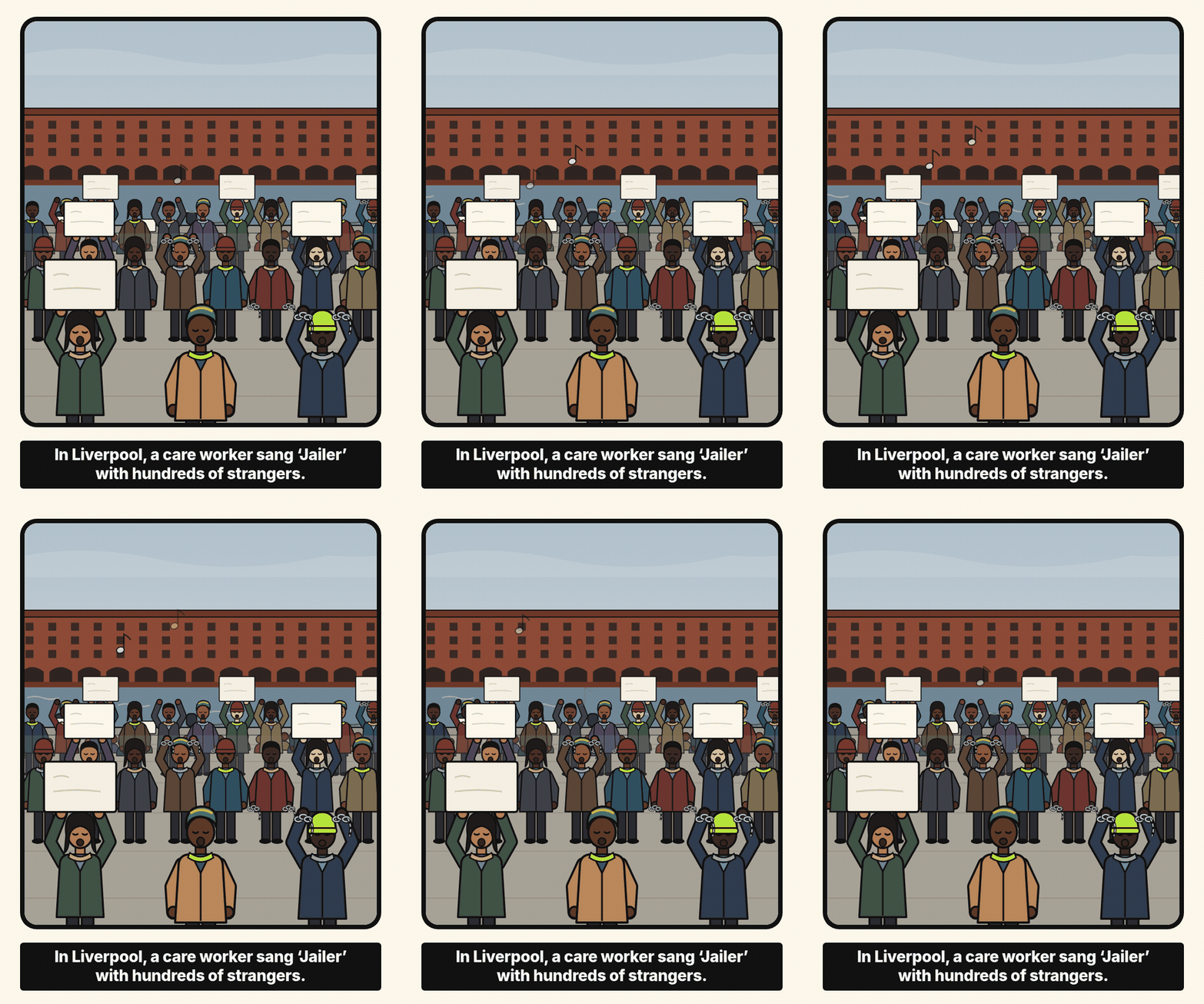
It was cold by the water at Albert Dock. There were hundreds of people. Care workers, NHS staff, cleaners, people from Nigeria, from Zimbabwe, from India, people holding signs with felt-tip letters, people with their uniforms under their coats because they were going straight to a shift afterwards. Some of them had wrapped chains around their wrists. Not to hurt anybody. Just to say it.
And then somebody started singing Asa. "Jailer."
Ola had not heard that song properly in years. It was the song of her younger days in Ibadan, of Saturday afternoons with the radio on and pepper soup on the stove. Here it was, rising off a Liverpool dock in the wind, sung by strangers from three continents, all together.
She did not sing at first. Then she did. And somewhere in the second chorus she started crying, and she let herself, because everyone around her was doing the same.
On the coach home, with her forehead against the cold window, she had one clear thought, and it surprised her with how calm it was.
I have been waiting for this country to say yes to me. Home has never once said no.
The idea was not new. It was only asleep.
Years ago, at that hospital desk in Ibadan, she used to say she would one day own a small clinic on her late father's land, on the plot behind the family house where her mother still lives. She would not be the nurse. She would be the owner, the one who makes sure it runs well. A qualified nurse every day, a doctor who comes in on set days. A consulting room, a small treatment room, a place for antenatal checks, a little pharmacy shelf, a waiting area with a fan that actually works. The kind of place where women in that area would not have to take two buses to see someone who would listen.
She had always said "one day." Liverpool made "one day" into "next year."
She sat at her kitchen table in her small flat with a calculator and her payslips. She could not send one big amount. She did not have one big amount. What she had was a monthly wage and the discipline of a woman who has done night shifts for years. Every month, after rent and bills and what she already sends home, she could set aside something like £400. In naira that was real money. Not enough to build a clinic in one go, but enough to build it in stages, one stage at a time, if every stage was done properly and nothing was wasted.
That was the part that frightened her. Not the money. The distance.
Her family are good people. Her brother Tunde would drive to the site any day she asked. Her mother would watch the workers from the back window with her reading glasses on. Nobody in her family was going to take her money.
But she had heard enough. She had heard it from colleagues, from the women in the WhatsApp groups, from the forums she scrolled on her break. The same sentences again and again.
One woman on a forum wrote, "I have nothing to show for it." Another wrote that she loved her family but had "started to dread their calls."
Ola did not want to dread her mother's calls. She did not want to ask her brother for receipts and watch his face go stiff on video. She did not want a site that looked busy in a WhatsApp video and a clinic that was not finished. And she did not want family to become the people she had to "just manage it" through, because that sentence, she knew, was how love turned into suspicion.
What she wanted was simple. To know what each payment was for before she sent it. To see that the work was done before it was paid for. And to be the one who said yes.
Two of her friends in England had used BuildMyHouse for work on their parents' houses back home. She asked them the way Nigerians ask, carefully and sideways, over food. They did not tell her it was perfect. They told her it was clear. They knew what they were paying for, they saw the work, and nothing moved without them saying so.
That was enough to make her try.
The scope came first. Before anybody touched a block, the clinic was written down in plain words: what the first phase would be (foundation and blockwork for the main building), what was included, what was not included, and what it would cost. When she asked whether the pharmacy shelf could be added "while they were there," it was not quietly agreed on the phone. It became a written change with its own price, for her to accept or refuse.
Then the person. A contractor was matched to the job, and he was working to that page, not to a phone call.
Then the stage. The work was broken into stages that fit her wage. Foundation. Blockwork to window level. Lintel. Roofing. One stage at a time, so she never had to send money for something that had not started.
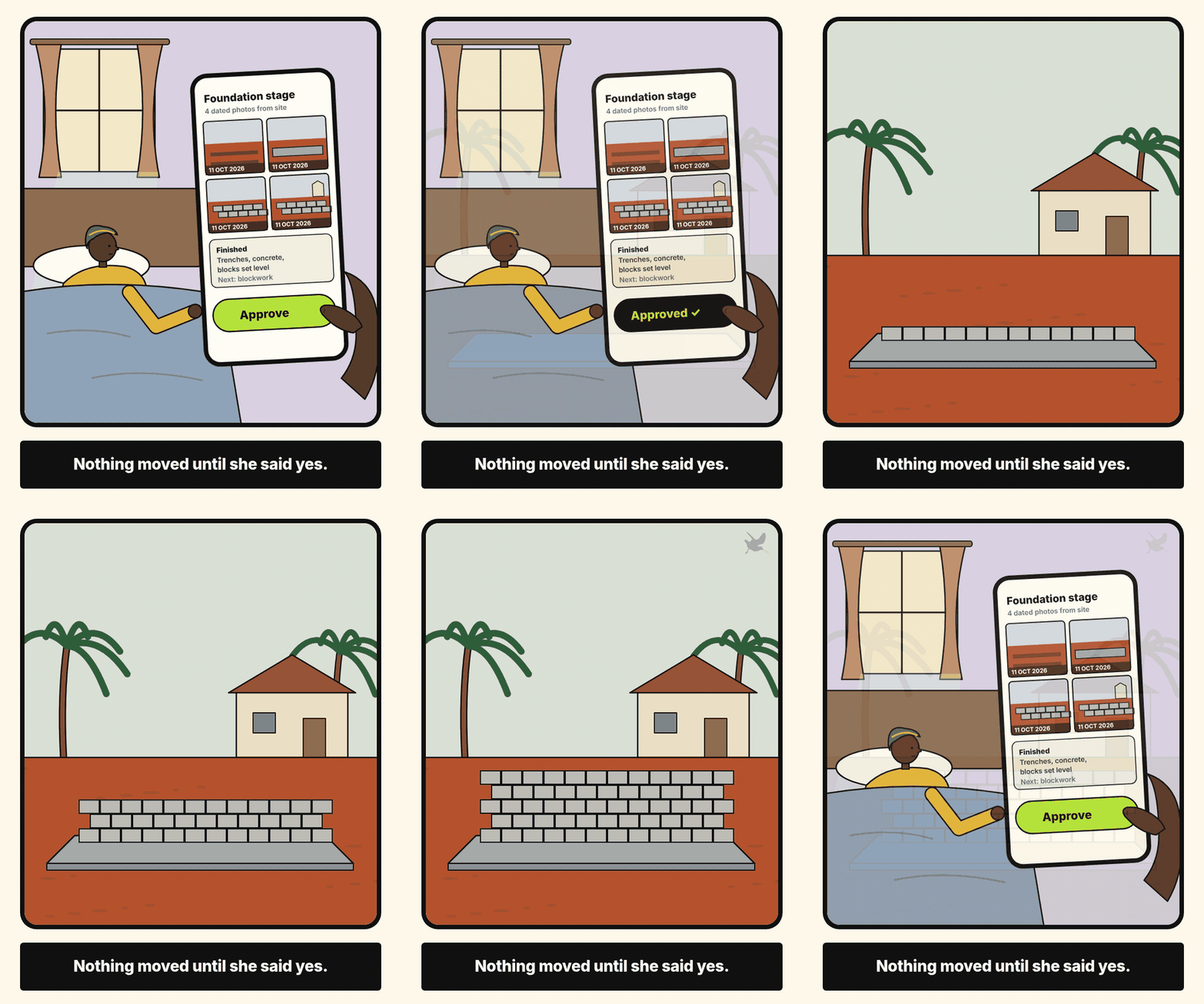
Then the proof. At the end of the foundation stage, on a Sunday morning after a night shift, Ola opened her phone in bed. Photos of the trenches, the concrete, the blocks set level, taken from all four corners, with the date on them and a short note of what was finished and what was next. Her brother also sent a video from the site, smiling, her mother in the background saying, "Ehen, Ola, you see your clinic."
Then the approval. She looked at it slowly, the way she checks a chart before a medication round. She asked one question about the corner by the drainage, and got an answer. Then she pressed approve.
Then the payment. Only then did the money for that stage move. Not because someone called her in a hurry. Not because the site looked busy. Because the stage was done, she had seen it, and she had said yes.
Next comes blockwork, and she will do the same thing again. Then the next stage.
The government has still not said what it will finally do. Ola still goes to work. She is still a very good carer. She has not given up on England, and England has not given up on needing her.
But something has shifted. On her night shifts now, at 3:40 in the morning, she sometimes opens her phone and looks at a photo of blocks on her father's land in Ibadan. Small. Grey. Real.
If everything holds, by this time next year there will be a signboard there, a nurse in the treatment room, and a fan that actually works. And the woman who owns it all will be the one who used to sit at a hospital desk and dream.
There is no place like home. Ola is building hers one payslip at a time, and nothing moves until she says yes.
Based on a true-life story. Ola is a fictional composite drawn from many diaspora voices; the Liverpool protest on 28 September 2026 was real, but she was not a real participant. The 15-year wait is a government proposal, not law; final policy is due before the end of 2026. All naira and pound figures are illustrative. The forum lines quoted are real public posts, not BuildMyHouse customers. This is not a case study, not a named customer, and not proof of any real project.